
Large Living Room Wall Art: Redefine Your Space
Recently, I visited my friend Sarah’s apartment in Hong Kong’s Central district and barely recognized the place. The same white walls that once felt flat and impersonal now projected personality and warmth. The difference? She had finally invested in big wall art for the living room — a beautiful piece from West Elm’s catalog that stretched across her main wall.
I was stunned at how one piece of statement wall art could transform the entire vibe of her space. The abstract canvas in saturated indigo and metallic gold didn’t just occupy the space; it established an eye-catching centerpiece that unified the design. Her budget-friendly IKEA sofa suddenly looked more expensive*, and the room looked finished.
That visit ignited my own artwork adventure. I noticed my living room walls were begging for focus. They needed something that would express my personality and unify my furnishings. After researching countless options and experimenting with different styles, I found that the right Big Canvas Art does more than add color — it transforms your entire living experience.
- Large wall art quickly adds instant drama and defines your room’s character
- The right piece becomes an a design anchor that connects all design elements together
- Wall art mirrors your personality and individualizes otherwise standard spaces
- Proportion is key — bigger pieces often work better than multiple small frames
- Unadorned walls leave impact on the table for creating depth and interest to your living space
- Art placement affects how roomy and composed your room appears
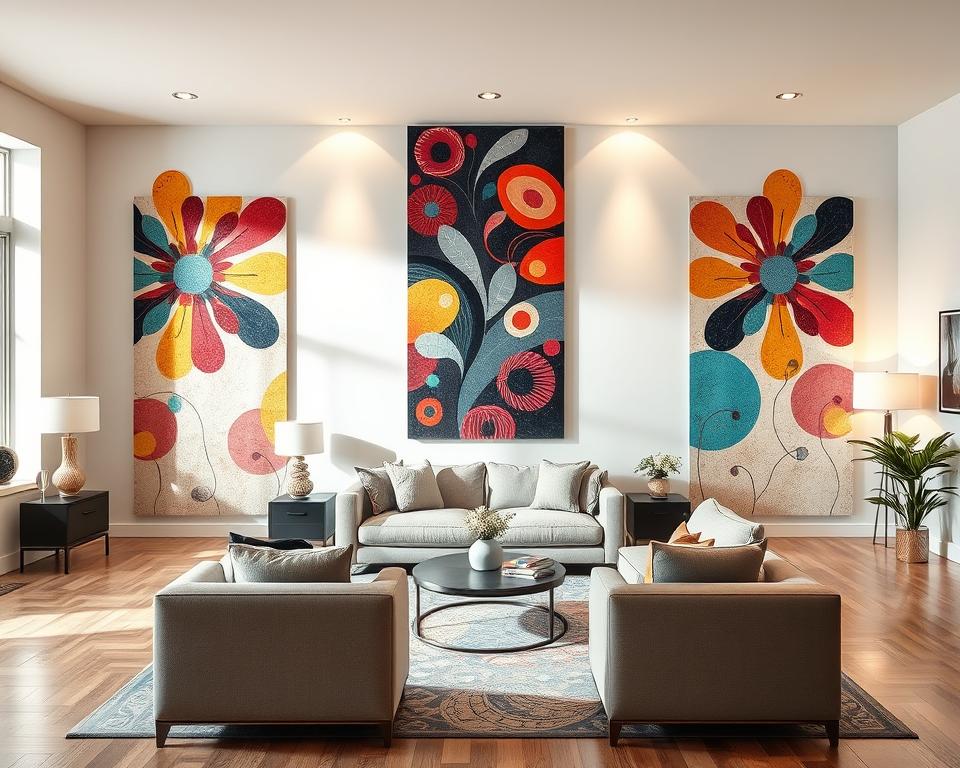
Why Big Living Room Wall Art Changes Everything
I’ve found that the right piece of oversized wall art can totally change my living space from ordinary to extraordinary. When I step into my living room, my eyes immediately land on the artwork that grounds the entire room. It’s not just dressing—it’s the core of my living room decor that establishes the ambiance for everything else.
How to Create a Strong Focal Point
I learned that every well-designed room needs a central focus. My feature artwork does exactly that by drawing attention and giving the eye a place to rest. Without it, my living room looked unfocused and unfinished. Now, my big statement canvas adds that wow factor guests notice immediately when they walk in.
Showcasing Your Style with Statement Art
My art curation tells my story better than any other element in the room. Whether I prefer abstracts or tranquil scenes, my large wall art reflects who I am. I’ve found that bold pieces showcase confidence while softer works create tranquility. Each piece becomes a talking point that highlights my preferences.
Enhancing Color Schemes and Room Harmony
I use my hero art to tie together my room’s color palette. A bright artwork can add energy to neutral furniture, while single-hue works brings sophistication to colorful spaces. In my open-concept home, artwork softly zones separate areas—my abstract piece signals the lounge while a nature print anchors the dining zone.
How to Choose Big Canvas Art for Your Room
Finding the right artwork for my living room feels like solving a design puzzle. I’ve learned that selecting big wall art isn’t just about choosing what looks nice—it’s about creating harmony between the artwork and my entire living space. The process requires careful consideration of dimensions, theme, and placement to reach that perfect balance.
Understanding Scale and Proportion
When I measure my wall space for large-format art, I apply the two-thirds rule. The canvas should cover about 60–75% of the available wall width above my sofa or console table. For a standard 9-foot sofa, I typically select big canvas art that’s at least 60 inches wide.
Style Matching: Art & Interiors
My interior design theme guides my artwork selection every time. In my minimalist spaces, I prefer geometric abstracts or black-and-white photography. For heritage-inspired spaces, I notice that landscapes or classical reproductions fit naturally. Big wall art becomes an extension of my decor personality.
Considering Light and Wall Space
Natural light is key in how my big art look throughout the day. I position vibrant pieces away from direct sunlight to minimize fade. In darker corners, I choose lighter artworks with metallic accents that bounce available light, making my room appear larger and inviting.
Transformative Big Abstract Art Ideas
When I think about the power of big abstract wall art, I’m struck by how a single piece can dramatically shift a room’s atmosphere. My living room woke up when I added a large abstract canvas above my sofa. The transformation was immediate and pronounced.
Abstract wall art offers countless possibilities for personal expression. I’ve discovered that color-rich works from color field or action-painting inspirations bring rhythm in any space. These paintings don’t just cover blank space; they bring life and personality to your home.
The beauty of a big abstract painting lies in its adaptability. In my bedroom, I chose calming blues and soft grays that promote relaxation. For my home office, I picked a vibrant piece with lively brushstrokes that helps me focus throughout the day. Abstract wall art speaks differently to each viewer, making it perfect for any room.
Size counts when selecting artwork. I recommend choosing pieces that cover at least two-thirds of your wall space above furniture. Popular options include:
- Oversized canvas prints (five feet and up)
- Multi-panel sets for wider walls
- Mixed media abstracts with textured elements
- Geometric patterns in high-contrast palettes
Big abstract wall art from galleries like Saatchi Art or Artsy offers authentic pieces that spark discussion. These paintings center your scheme that anchor your entire room design while reflecting your unique taste.
Gallery Wall Ideas vs. Oversized Canvas Prints
When I’m choosing between a curated gallery wall and a single large canvas for my living room, I always think about my intended mood. Both options can have big impact, but each brings its own distinct vibe. A group of pieces tells a story through multiple pieces, while a single large canvas creates immediate clarity.
Why Pick Many Instead of One
I find that gallery wall ideas excel when I want to tell a layered story through various memories and art styles. Multiple Big Wall Art pieces let me:
- Display family photos alongside artistic prints
- Bring movement to long walls
- Mix different frame styles for an eclectic feel
- Refresh a portion without starting over
The Impact of a Single Statement Wall Decor
Oversized canvas prints grab the spotlight. I love using them when my room needs a strong focal point. A single piece simplifies the story and gives my space a sophisticated gallery feel. One bold canvas is especially effective above my fireplace or behind my sofa where it anchors the entire room.
Combining Scales for Balance
My favorite approach mixes the two. I pair one large canvas with supporting artworks nearby. This technique builds dimension without overwhelming my walls. By maintaining a connected palette but playing with scale, I achieve a balanced look that looks thoughtful but easygoing.
Modern Installations & Contemporary Hangings
When I want to add real depth to my living room walls, I look beyond traditional flat canvases. Modern art installations introduce 3D presence that gives a curated gallery vibe. These pieces play with shadow, reflect light, and invite viewers to experience art from different angles.
3D Wall Statements
I find that sculptural pieces do the trick on plain walls. These contemporary wall hangings stand off the surface, creating changing shadows throughout the day. Popular options include:
- Geometric wire sculptures from CB2
- Asian-inspired carved wood panels
- Abstract resin pieces with flowing forms
- Paper relief maps and contours
Industrial Meets Organic
Metal wall sculptures bring industrial elegance to my space. I love how copper pieces from West Elm gain character. Wood installations bring natural calm—reclaimed teak branches or carved mahogany panels serve as stunning home accent artwork. These materials work beautifully in minimalist settings where tactility leads.
Textile Art and Woven Wall Decor
Soft textiles add cozy appeal to hard surfaces. I’ve discovered that macramé pieces from artisan makers or handwoven tapestries bring bohemian charm without visual overload. These contemporary wall hangings improve acoustics too, making spaces feel more intimate. Natural fibers like jute and wool accent both rustic and modern interiors beautifully.
How I Position Abstract Wall Art for Maximum Impact
When I first started decorating my home, I learned that placement of abstract wall art can completely change a room’s energy. The right positioning turns a simple piece into an interior design focal point that draws every visitor’s eye.
Above my sofa, I hang my largest statement piece at eye level when seated. This invites closer viewing while keeping proportions right. The bottom edge sits about eight inches above the sofa back, giving the Abstract Wall Art artwork space to float without feeling disconnected on the wall.
I’ve discovered that slightly off-center positioning works wonders for creating visual interest. My large living room wall art doesn’t always need perfect centering. Shifting a piece slightly to one side and balancing it with a floor lamp or tall plant adds movement that feels intentional rather than rigid.
In my bedroom, I select calming abstract wall art positioned lower on the wall behind my bed. Soft, muted abstracts in cool blues and greys encourage relaxation perfect for rest. The artwork sits just atop the headboard, making it pleasant at rest height.
My dining room features a energetic abstract piece mounted at standing view height. This placement sparks dialogue and enlivens meals. Large living room wall art principles apply here too – I maintain at least ~15 cm of space from the ceiling to keep the ceiling line open.
Gray Abstract Art and Neutral Tones in Living Room Decor
I’ve discovered that gray abstract art creates an incredibly versatile foundation for any living room decor. These neutral pieces flex with changes in my space, evolving as decor evolves while staying elegant. The beauty of neutral tones lies in their ability to support rather than steal focus with existing design elements.
Harmonizing Statement and Soft Tones
When I select big abstract wall art in gray tones, I find it lands right in the sweet spot between making a statement and keeping cohesion. My favorite approach includes:
- Charcoal + cream pairings for bold contrast
- Adding silver metal frames to echo metal finishes throughout the room
- Stacking greys from light to dark for depth without visual heaviness
Gray-on-Gray Elegance
I’ve learned that monochromatic schemes using gray abstract art heighten my living room decor to curated polish. Black-and-white photography paired with grayscale paintings creates a cohesive look that feels intentional and refined. Big abstract wall art in these tones serves as the anchor, allowing me to experiment with texture through pillows, throws, and rugs without disrupting the visual flow.
“Art should comfort the disturbed and disturb the comfortable” – Banksy
This approach helps decorative mirrors with clean-lined frames echo the art while reflecting light to brighten the space naturally.
Statement Murals for Living Rooms
When I want to make a bold shift in my living room, decorative wall murals present many choices. These large-scale statements serve as both decor and art and icebreakers. From breathtaking photography to artistic mirrors, I’ve discovered that the right mural can totally reshape the feel of any space.
Scenic & Cityscape Murals
I find photography murals deliver sophistication with sentiment to my walls. Whether I pick editorial-quality city views or tranquil nature vistas, these pieces create atmospheric depth to my room. Big wall art featuring landscapes feels like an open horizon right in my living space.
My favorite photography options include:
- Monochrome architecture|from cities like Paris
- Sunset panoramas over ocean horizons
- Alpine vistas that bring natural grandeur indoors
- Retro travel art from brands like TWA
Custom Murals vs. Ready-Made Big Wall Art
I’ve learned that choosing between custom and ready-made pieces comes down to cost and taste. Custom decorative wall murals from studios like artisan studios enable one-of-a-kind results. Ready-made options from retailers like well-known brands offer quality home accent artwork at accessible prices.
Reflective Statement Pieces
Mirrors serve two roles in my decor strategy. I use sculptural frames from brands like Uttermost to turn reflection into art. These reflective surfaces expand the room while introducing shine to empty walls.
Conclusion
I’ve discovered that large wall art does more than just cover blank walls. It acts as the heartbeat of my living room, creating an atmosphere that speaks to everyone who enters. From color-rich abstracts to sculptural metal pieces, each piece I choose shares a part of my taste and transforms plain walls into captivating focal points.
Living room wall art has taught me that scale carries the message. My journey through different options made clear that oversized canvases command attention while gallery walls create intimate conversations. Contemporary wall hangings bring modern energy to traditional spaces, and gray-toned abstracts add sophistication without crowding the scheme.
The right oversized piece makes a home feel truly yours. I’ve learned to listen to my gut when selecting pieces that spark joy. Whether I’m drawn to boutique gallery finds, the key is choosing artwork that greets me with delight. My walls now tell my story, and every piece builds the unique character of my home.
FAQ
What size wall art should I choose for my living room?
I recommend measuring your wall space first and considering the scale of your furniture. For areas above sofas, I typically recommend pieces that are about two-thirds the width of the sofa. Large living room wall art works beautifully on expansive walls, while smaller spaces might suit gallery wall arrangements. Remember, oversized canvas prints can make a bold statement in rooms with high ceilings.
How do I create an interior design focal point with wall art?
I’ve found that positioning a large statement canvas or statement wall decor above your main furniture piece does the job. The key is choosing artwork that pulls focus when entering the room. I like to pick colors that complement or gently contrast my existing palette, ensuring the art becomes a natural focal point without dominating the room.
One big piece or a gallery wall?
This ultimately depends on your personal style and wall dimensions. I love using a single oversized canvas for instant impact, especially above sofas or beds. However, gallery wall ideas excel for creating visual interest along hallways or stairways. When I’m working with irregular wall spaces, I often mix different sizes to create a curated look.
Best modern installations for today’s homes?
I’m particularly partial to sculptural metal and wood installations that introduce depth to flat walls. Three-dimensional pieces and contemporary wall hangings add layered character. For a softer approach, I sometimes incorporate textile art or woven wall decor, which introduces coziness while keeping the look contemporary.
Using gray abstract art well?
Gray abstract art is incredibly versatile! I use it to create sophisticated, monochromatic schemes that feel elegant and timeless. These neutral pieces pair well with both bold and subtle color palettes. I often pair gray abstracts with metal finishes or timber details to add depth while keeping cohesion and polish.
Do murals work in small rooms?
Yes! I’ve discovered that the right mural can open up a tight space. Photography murals with depth, like landscapes, add visual depth. For compact areas, I recommend lighter-toned murals or those with upright lines that draw the eye upward, making ceilings appear higher.
What height should I hang art?
I typically hang artwork so its center sits at gallery eye height, which is usually 57–60 inches from the floor. However, when placing art above furniture, I leave about 6–8 inches between the furniture top and the artwork’s bottom edge. This keeps the pieces visually connected while preserving breathing room.
Can I mix different art styles in the same room?
Definitely! I love mixing styles to create an personalized look. The trick is finding a unifying element — whether it’s a palette, framing detail, or theme. I might pair black-and-white photography with bold abstracts, as long as they harmonize in tone or balance in size and weight.
How do I choose home accent artwork that won’t go out of style?
I focus on selecting pieces that I genuinely love rather than chasing fads. Classic options like quality landscape photography, well-executed abstracts, and monochrome works tend to have staying power. I also invest in statement pieces from reputable sources like trusted studios, which offer collections that age gracefully.
Related: Dining Chairs: Culinary Art Spaces